Is McDonald's Halal in Spain?
Published: 5 November 2026 · Updated: 5 November 2026 · By Halal Europe Guide Research Team
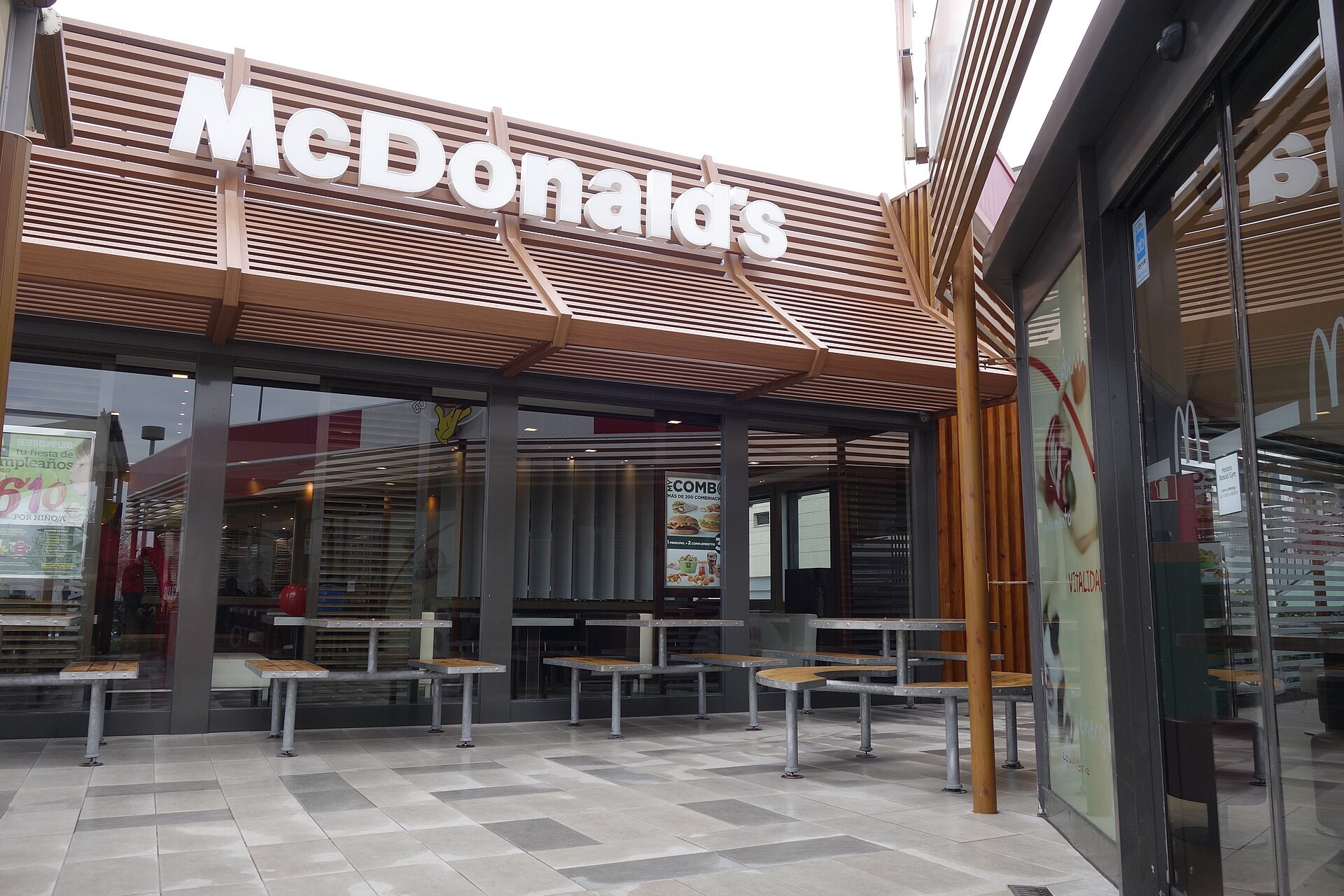
The short version: No — McDonald’s in Spain is not halal. Spain has no halal programme, the meat is not halal-certified, and pork is on the menu. If you want a burger in Spain, use the verified halal restaurants in our Madrid, Barcelona and Seville guides instead.
Halal and alcohol signs — this page’s verdict
Not halal — no certification Alcohol policy: not verified on this page — please ask the branch
No halal programme, meat not halal-certified, pork on the menu.
McDonald’s is the most-asked halal question in the world, and Spain is one of the places where the answer is clearest — because the chain itself has said so. McDonald’s operates 43,477 restaurants in 119 countries as of the end of 2024, and fewer than 25 of those countries hold national halal certification (HalalSpy, 2026). Spain is not one of them. This page gives you the straight answer for Spain, the evidence behind it, the one claim that says otherwise — and why we do not trust it — and where to eat instead.
The key fact, stated plainly: in Spain, at the moment, the big brands do not offer halal meat. That is the consistent finding of every country-by-country halal guide we checked — HalalSpy’s 2026 verification table lists Spain as “Not halal / None / Pork on menu / No halal program”, and Spanish travel guides reach the same conclusion: the burgers and pizzerias with Muslim owners and halal food are the answer, not the chains.
That matters because Spain is a wonderful country for Muslim travellers — and a confusing one for fast food. Barcelona, Madrid, Seville and Granada all have plenty of halal options, and neighbourhoods such as El Raval in Barcelona and Albaicín in Granada have halal butchers and bakers on every other street. The halal food is there. It just is not inside a McDonald’s.
The short history: McDonald’s halal position, country by country
McDonald’s halal certification is national, not global. Where the whole market is halal — Malaysia (JAKIM), Indonesia (MUI), Singapore (MUIS), Saudi Arabia, the UAE, Kuwait, Qatar, Bahrain, Oman, Pakistan, Turkey (Diyanet), Egypt, Jordan, Morocco (IMANOR), South Africa (ICSA), Bangladesh and Brunei — the entire menu is certified, from the beef patties to the sauces. Where it is not, the whole menu is not: the United States, the United Kingdom, Canada, Australia, Switzerland, Taiwan, Japan, South Korea and most of Europe have no national halal certification (HalalSpy, 2026).
Spain sits firmly in the second group. And the chain’s own European position makes the reason explicit: with the exception of meat sourced for the Moroccan and Réunion Island markets, none of the meat supplied to McDonald’s in Europe is certified as halal. That is a statement from McDonald’s itself, quoted in travel guides covering Spain — and it covers every European market, including Spain, France, Germany and the UK.
The Madrid claim — and why we do not trust it
One travel blog, LuxuryTravelDiva, claims that McDonald’s in Madrid offers halal-certified meat at select locations. We checked that claim carefully, because it is the only source saying yes — and it does not hold up. There is no McDonald’s Spain statement supporting it, no certifier listing, no named branch, and no certificate a reader could check. Against it stands the chain’s own European position, quoted above, and every independent country-by-country guide, all of which list Spain as not halal.
We are not saying the blog is lying — a single franchisee could, in theory, source halal meat for one branch. But a halal claim without a named certifier, a published certificate or a chain statement is not a fact a guide can publish as true. Until McDonald’s Spain or a recognised certifier says otherwise in public, the honest answer for Madrid — and for all of Spain — is no. If you find a Madrid branch displaying a real halal certificate, send us the photo and the address through our contact page and we will recheck this page the same day.
Why it’s country-by-country (and always will be)
McDonald’s is a franchise business. Each market is run by a local franchisee or master licensee who decides whether to pursue halal certification, based on local demand, suppliers and cost. A halal programme means changing the entire supply chain — certified slaughter, segregated storage, separate fryers, staff training and audits — and in a market like Spain, the franchisee has not made that investment. The demand is there in the cities, but the chain’s European supply chain is built around standard suppliers, and rebuilding it for one market is a decision the franchisee has not taken.
That is also why a single “halal McDonald’s in Spain” rumour can never be trusted on its own. Even if one branch somewhere claimed halal meat, the claim would need a named certifier, a published certificate and a segregated kitchen to mean anything. Until then, the honest answer for the whole country is no.
How to check your specific McDonald’s branch
If a branch in Spain ever tells you its meat is halal, check all three of these before ordering:
- Ask for the certifier’s name. A real halal claim names its certification body — in Spain that would typically be the Instituto Halal or an internationally recognised certifier. “Our supplier says it’s halal” is not a certification.
- Look for the certificate in the restaurant. Certified branches display their halal certificate. If there is no certificate on the wall, treat the claim as unverified.
- Ask about the kitchen. Halal meat cooked in the same fryers as pork products, or served alongside them, does not meet most scholars’ standards even if the meat itself was slaughtered correctly.
All three should agree. If any one of them fails, eat elsewhere — Madrid, Barcelona and Seville all have verified halal burger alternatives in our city guides.
What “halal” means inside a McDonald’s kitchen
Halal is not just about the meat. For a burger to count as halal, the beef or chicken must be slaughtered according to Islamic law (dhabiha), and then kept halal through the kitchen: separate storage, separate fryers, no cross-contact with pork, and no alcohol-based sauces. In a certified market such as Malaysia or the UAE, the entire menu meets that standard, from the patties to the sauces. In an ordinary Spanish McDonald’s, none of that applies: the meat comes from standard European suppliers, pork is on the menu, and the kitchens are shared.
Fish and vegetarian items exist on the Spanish menu, but they are prepared in the same kitchens with no halal certification — which is why most observant travellers treat them as a personal judgement call, not a halal meal. The safe answer is the same as for the burgers: eat at a halal restaurant instead.
The rest of Europe: don’t assume
| Country | McDonald's halal status | What we know |
|---|---|---|
| Spain | Not halal | No halal programme; pork on menu; meat not halal-certified. |
| France | Not halal | No halal meat; the chain’s European supply is not halal-certified. |
| Germany | Not halal | No halal programme; standard European supply only. |
| United Kingdom | Not halal | McDonald’s UK has stated it has no plans to offer halal food, citing kitchen and supply-chain changes. |
| Netherlands | Not halal | No halal programme. |
| Malaysia | Fully halal | Certified by JAKIM; whole menu halal. |
| Saudi Arabia / UAE | Fully halal | Whole menu halal under local authorities. |
| Turkey | Fully halal | Certified by Diyanet; whole menu halal. |
Sources: HalalSpy country verification (2026); McDonald’s Europe statements via travel guides. Always confirm with the specific branch — franchise decisions change.
Better alternatives when the answer is no
Spain’s halal scene does not need McDonald’s. In Madrid, the halal restaurants around Lavapiés and Sol serve proper burgers, kebab and Middle Eastern food at local prices — see our Madrid guide. In Barcelona, the halal restaurants of El Raval cover Turkish, Pakistani and Moroccan cooking within minutes of the Ramblas — see our Barcelona guide. In Seville, the halal restaurants around the old town serve the same comfort food with Andalusian sunshine — see our Seville guide. And in Málaga, the halal restaurants of the city centre cover the Costa del Sol’s Muslim travellers — see our Málaga guide. A halal burger from a Muslim-owned restaurant is almost always the better meal — and the claim is one you can actually check.
Practical tips
- Never assume a McDonald’s is halal because another country’s McDonald’s is. The brand is the same; the supply chain is not.
- In Spain, ask for “carne halal” and look for the Instituto Halal logo — it is the certification mark Spanish halal restaurants actually display.
- Spanish halal butchers are your best friend for self-catering: Madrid’s Lavapiés and Barcelona’s El Raval both have halal butchers within minutes of the tourist centre.
- If you are travelling with children who want a burger, search our city guides for halal burger restaurants rather than trusting a chain sign.
- When a chain’s halal status changes, it changes by country first — check this page’s country table before your trip, not after you arrive.
Frequently asked questions
Is McDonald's halal in Spain?
No. McDonald's Spain has no halal programme: the meat is not halal-certified, pork is on the menu, and no certification body backs the food.
Is McDonald's halal in Madrid?
No. One travel blog claims select Madrid locations offer halal-certified meat, but we found no McDonald's Spain statement or certifier listing to support it, and the chain's own European position says otherwise. Treat the claim as unverified.
Does McDonald's Spain serve pork?
Yes. Pork products are on the menu in Spain, and the beef and chicken are not halal-certified. That combination is why observant Muslims should eat elsewhere.
Is McDonald's halal in France or Germany?
No. McDonald's has no halal programme in France, Germany, the UK or the Netherlands either. In Europe, only the Moroccan and Réunion Island markets receive halal-certified meat, according to McDonald's own statements.
Where is McDonald's halal?
In Muslim-majority markets with full national certification: Malaysia (JAKIM), Indonesia (MUI), Singapore (MUIS), Saudi Arabia, the UAE, Pakistan, Turkey (Diyanet), Egypt, Jordan and Morocco, among others. Of the 119 countries where McDonald's operates, fewer than 25 hold national halal certification.
What can Muslims eat at McDonald's in Spain?
Nothing on the menu is halal-certified. Fish and vegetarian items exist, but they are prepared in shared kitchens with no halal certification. Most observant travellers eat at Spain's many halal restaurants instead.
Is Burger King halal in Spain?
No. Like McDonald's and KFC, Burger King Spain does not offer halal meat. Spain's halal food comes from Muslim-owned restaurants — see our Madrid, Barcelona and Seville guides.
Final thoughts
The honest answer for Spain is a plain no — and that is actually good news, because Spain’s own halal restaurants are better than any chain. A halal burger in Lavapiés or a proper kebab in El Raval will feed you better, cheaper and with a claim you can actually check.
Spotted a halal-certified McDonald’s branch in Spain, or a change in McDonald’s Spain’s policy? Tell us through our contact page with the branch address and the certificate, and we’ll recheck it — reader corrections keep this guide accurate for everyone.
More guides
Is McDonald's Halal in France?
The same question, answered for France.
Is McDonald's halal in France? →Own a halal restaurant in Spain? Add a free listing.